Spring storm damage has a way of feeling sudden. A healthy-looking yard goes to bed under gray clouds and wakes up under a broken maple branch. A driveway disappears under a split trunk. A roofline that looked clear on Tuesday has a limb resting on it by Wednesday morning.
Storm damage feels random. A lot of the time it is not.
Weather is the trigger. The tree condition is the setup. Wind, heavy rain, and saturated soil finish the job. That job gets easier for the storm when the tree already has deadwood, weak branch unions, trunk cracks, or root trouble.
That is why spring is such a critical season for tree care in Indianapolis. This is when fast weather swings arrive. Warm days wake up the yard. Then strong fronts roll through and test every weak point overhead. If a tree has a defect, spring tends to find it.
That sounds dramatic, but it is plain local experience. Every year, property owners across Indianapolis, Carmel, Fishers, Noblesville, and Westfield deal with downed limbs, leaning trees, blocked driveways, and branches over roofs after storms. Some of that damage is unavoidable. A lot of it is not.
The best time to prepare for storm damage is before the sirens. Not during them.
What spring storms do to trees
Storms stress trees in several ways at once. Wind pushes against the canopy. Rain adds weight to branches. Saturated ground weakens root hold. Lightning can strike. Late ice can weigh down limbs that already have poor structure.
A tree does not need to fall in full to create serious damage. One large limb can punch through shingles, tear down gutters, crush a fence, or block a garage exit. In many cases the whole trunk stays upright and the homeowner still ends up with a major repair bill.
Wind pressure is the most common force. Long, overextended limbs act like levers. Dense canopies catch air like a sail. Weak branch unions split under movement. Deadwood snaps without much warning.
Wet soil creates another problem. Roots anchor the tree. When the soil goes soft, that grip weakens. Large trees that seemed stable through winter can start to lean after one hard rain event. If the root plate lifts, the danger changes fast.
That is the pattern storm crews see over and over. The weather did not create all the weakness. It exposed it.
The tree defects storms expose first
Storms go after weak points. Trees with solid structure can still lose limbs, but trees with visible defects are far more likely to fail.
Dead branches are near the top of the list. They dry out, lose flexibility, and break under pressure. A dead limb over a driveway is not a maybe problem. It is a delayed problem.
Weak branch unions cause plenty of trouble too. These are spots where two stems meet at a narrow angle and trap bark between them. From the ground, the tree can still look fine. Under storm load, that union can split open.
Cracks in the trunk matter. Cavities matter. Large limbs with old storm scars matter. Heavy branches that stretch far from the trunk matter. Trees that lean toward homes or garages matter. Root issues matter just as much, even though they are easier to miss.
If the ground heaves near the base after a storm, pay attention. If roots become exposed or the tree suddenly tilts more than it used to, that is a strong warning. Trees rarely lean for a fun new look.
The most common storm damage homeowners see in Indianapolis
The first damage many people notice is a broken branch on the lawn. That is the mild version.
A more serious case involves a large limb hanging in the canopy after partial failure. These limbs are dangerous. They can stay lodged for hours or days, then drop without warning. People walk under them all the time and assume the danger passed. It did not.
Then there are split trunks. Wind can twist the crown and tear a trunk apart at a weak point. Once that happens, full removal is often on the table.
Uprooted trees create another level of urgency. A tree that tips into the root plate is unstable even if it has not fully fallen. It can shift more. It can take nearby soil with it. It can pull toward the house with the next gust or the next rainfall.
Storms can also push branches into service lines, block streets, and trap cars in driveways. Those cases move from tree issue to access and safety issue very quickly.
The details change from property to property. The pattern does not. Weakness plus weather equals damage.
Warning signs you should not ignore this spring
Most dangerous trees give some notice. The problem is that people are busy, and trees do not use warning labels.
Deadwood is one signal. Branches with no buds, no life, and brittle bark stand out more in early spring before the canopy fills in. That makes March and April a good time to inspect.
Watch for branches that extend far over the roof. Watch for limbs that hang low over parked cars or walkways. Look at the shape of the canopy. Does one side feel much heavier than the other. Does the tree appear off balance. Is there a visible crack where two big stems meet.
Check the base too. Mushrooms, decay, exposed roots, lifted soil, or fresh leaning all point to trouble. Not every defect means the tree needs removal, but each one deserves a closer look.
A quick question helps here. If this tree failed tonight, what would it hit? The answer tells you how urgent the issue is.
If the answer is house, driveway, car, or power line, that tree deserves attention now.
Why pruning before storm season works
Preventive pruning is one of the clearest ways to reduce spring storm damage. It is not magic. It is maintenance that removes the parts most likely to fail.
Crews can take out deadwood, shorten overextended limbs, and reduce canopy crowding. That lowers wind resistance and removes weak material before the weather gets a shot at it. Pruning can also improve balance across the crown, which helps the tree handle movement more evenly during storms.
This kind of work is far less stressful than an emergency response. The weather is calm. Access is clear. Equipment can be placed where it belongs. The tree is more stable. The crew has time to make clean decisions.
That matters for homeowners in practical terms. Controlled pruning in spring often costs less than emergency removal after a storm. It also lowers the chance of damage to the roof, fence, or driveway in the first place.
A branch removed on a calm Tuesday in March is far better than the same branch removed from your shingles on a stormy Friday night in April.
What to do right after a storm hits
If a tree fails during a storm, safety comes first. People get hurt when they rush toward the damage before the tree settles or the hazards are clear.
Stay away from hanging limbs. Stay away from split trunks. Stay away from downed or nearby power lines. Keep children and pets out of the area. Take photos from a safe distance if you can do it without getting close to the tree.
If a branch or tree is on a structure, do not start cutting. Storm-loaded limbs can move with force. Cuts that seem simple on the ground become dangerous fast when tension, compression, and unstable weight enter the picture.
Call a tree crew trained for storm response. If utility lines are involved, contact the power company first or at the same time. Access and electrical danger change the response plan.
If the tree only dropped small clean limbs in the yard, a homeowner may handle basic debris pickup once weather passes and the area is safe. Large wood, hanging branches, trunk damage, and leaning trees are different. Those need professional work.
Why crane work matters after major storm damage
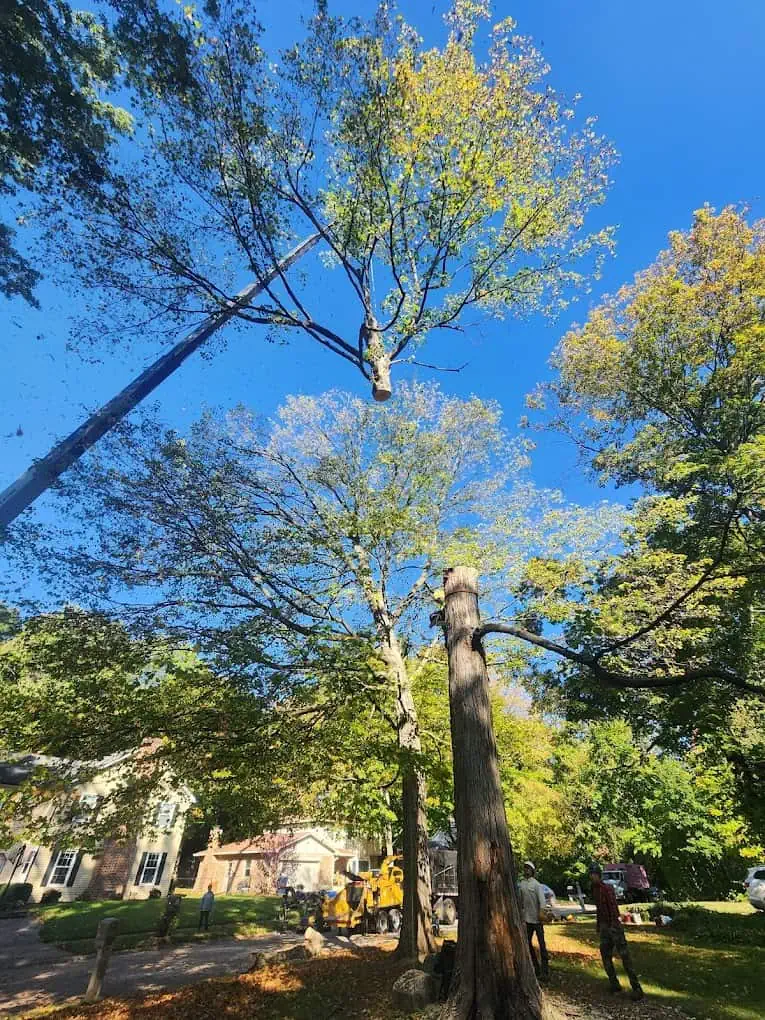
Some storm jobs go beyond standard cutting and hauling. Large trees near homes, garages, fences, or tight side yards often need crane support. That is especially true when the trunk split high, the root plate lifted, or the crown settled onto a structure.
Crane-assisted removal gives crews better control over heavy sections. Instead of free-falling or swinging large cuts through a tight area, the crane supports the load and lifts it away in a planned sequence. That lowers the chance of added damage and often speeds up the job.
This matters in neighborhoods with mature trees and limited access. A big storm-damaged tree in a tight lot is not the place for guesswork.
Why Indianapolis homeowners should deal with this now
This topic is seasonal in the most useful way. March and early spring are the setup months for everything that follows. The trees are easier to inspect before full leaf-out. Winter damage is still visible. Spring storms are already on the radar. The gap between routine trimming and emergency work is still open.
That gap closes fast once the weather pattern shifts.
If a tree on your property has deadwood, poor balance, roof clearance issues, old storm scars, or a fresh lean, now is the time to address it. A spring inspection and targeted pruning job can lower the odds of emergency removal later in the season.
Tree care feels easy to delay when the yard still looks quiet. Then one hard storm turns quiet into urgent. Indianapolis homeowners know that story well. The better move is to get ahead of it.
